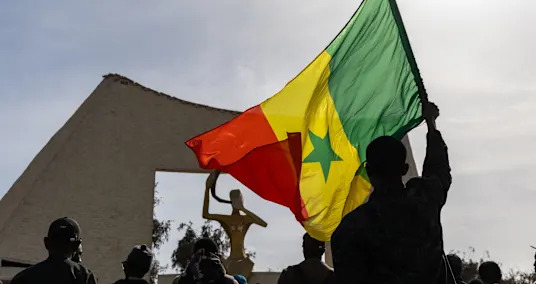
Senegal's President Bassirou Diomaye Faye has signed a new law doubling to 10 years the maximum prison term for sexual acts by same-sex couples.
The new law also criminalises the "promotion" of homosexuality, which includes any public representation and financial support by individuals or organisations, and provides for three to seven years in prison for those found guilty.
The legislation was a campaign promise of President Faye and Prime Minister Ousmane Sonko and was approved by parliament last month.
UN rights chief Volker Türk has described it as "deeply worrying", saying that the anti-LGBT legislation "flies in the face of sacrosanct human rights".
The UN official and rights groups had urged the president not to sign it into law, but the government dismissed the international criticism, arguing that the measures reflected the views of Senegalese people.
It was taken to parliament after a wave of arrests over alleged same‑sex relationships, which were already banned under Senegalese law.
In February, 12 men, including two public figures and a journalist, were arrested and charged with "acts against nature".
Campaign group Human Rights Watch has recently noted a rise in "hostility toward LGBT people", adding that MPs had twice – in 2022 and 2024 - unsuccessfully sought to raise jail terms and penalties against same-sex relationships.
The new law was passed by an overwhelming majority in the National Assembly on 11 March, with 135 MPs voting in favour, none against and three abstaining.
Several other African countries have also introduced tough new laws against the LGBTQ+ community in recent years.
In September last year, Burkina Faso's transitional parliament approved a bill banning homosexual acts, following its neighbour Mali in 2024.
In 2023, Uganda voted in some of the world's harshest anti-homosexual legislation, meaning that people engaging in same-sex relationships can be sentenced to death in certain circumstances.
Ghana is also planning to re-introduce an anti-homosexual bill that activists say threatens basic human rights, safety and freedom.
You may also be interested in:

Go to BBCAfrica.com for more news from the African continent.
Follow us on Twitter @BBCAfrica, on Facebook at BBC Africa or on Instagram at bbcafrica
BBC Africa podcasts
LATEST POSTS
- 1
 Thousands of New York City nurses set to strike Monday if deal isn't reached with hospitals
 - 2Startled Venezuelans express relief but also fear after Maduro arrest
- 3Instructions to Pick the Best Course for Your Next Waterway Voyage: Objections, Views, and Social Encounters
- 4The Secret Side of Italy: 12 Underrated Destinations Locals Don’t Want Tourists to Find
- 5Step by step instructions to Safeguard Your Teeth During Sports Exercises


- Getting ready for a Mechanized World: 10 Positions That computer based intelligence Could Dominate
- Investigating the World's Chief Authentic Urban communities to Visit
- Carry Nature Inside with These Staggering Plant Decisions
- Cheetah, Hammerhead Shark, and 38 Other Animals in Danger of Extinction Receive New International Protections from U.N.
- Artemis II updates: NASA's moon mission breaks Apollo record for farthest distance humans have traveled from Earth
- Family-Accommodating Snow Sports Experiences
- ‘RichTok’ Influencer Becca Bloom Shows Off Custom Invitations and ‘Most Valued Possession’ from Her Viral 2025 Wedding
- The most effective method to Perceive the Early Side effects of Cellular breakdown in the lungs
- Auschwitz Committee wants German auction of Holocaust items scrapped